~ Estimated Reading Time: 8 min ~
"If you can parry everything, doesn't that mean you could be totally invincible?"
Us of the new generation were taken aback by that loaded premise, you'd hear confused whispers on forums like this. As a teenager, there was this allure from afar to the idea of 3rd Strike - spoken with nothing but praise, infinite in its depth. It was easy to develop an exaggerated image of the game as something you can get literally perfect at, but I didn't find the real answer disappointing.
It didn't take long to realize my misconception couldn't be true, because I'd learn fighting games aren't just about reacting to your opponent's moves. Most close-ranged attacks come out quicker than the average human's reaction time. Getting up-close necessitates you think ahead. This is why in comparison to singleplayer games requiring telegraphing, parries in 3rd Strike are more of an psychological process of learning the exact rhythms of when your human opponent clicks buttons. And in turn, they must think about how to delay their attacks in order to become unpredictable. The truth of the "infinite depth" 3rd Strike holds is that it uniquely rewards subverting your own behavior, which creates this infinite back and forth of adaptation.

Parries are of course not a perfect solution to solving depth; depth itself isn't necessarily a solution to anything. One result of these systems, however, is that you can get away with the wrong answer more often. You can be perfectly prepared to anti-air an incoming aerial move, but then they air-parry you and win the exchange anyways. A disadvantageous situation like that - one that'd be a guaranteed loss in any other Street Fighter - can always be wormed out of. It creates depth, but good plays concretely resulting in being rewarded with advantage has its own appeal. But when I watch top players react to getting parried, but they counter-parry; these back and forth interactions that go by so fast, I have to slow the footage down... It just makes me feel something! Few games have better captured that martial arts-fantasy story, reminding you that you're surrounded by endlessly more wise fighters than you.
Capcom, on the brink of Y2K, had a bold ambition to create a game with no perfect strategy. Where as long as you expect an outcome, you can counteract to it by confidently predicting it. Countering Counterplay forever - that was their solution to an "endless game". I used to think 3rd Strike had aged timelessly, but these days I look at it, and see it as a beautiful, beautiful time capsule.

Many fighting games suit different moods; what 3rd Strike thrives on is intimacy. What plays to its strengths most are long, meticulous sessions. When the game is built around a constant war of adaptation on both sides, long sessions give us the time necessary to learn each other's fighting style. This is something understood even at a competitive level: 3rd Strike's scene is very dedicated to the First-to-Ten Wins format. Watching VODs back makes it obvious that skilled players have mastered transforming themselves, the timing of when they strike completely changing from the first to last match in a set.
But for a casual like me? I've come to associate that hardcore trait of Street Fighter III instead as something meditative. Like training partners, coming to an understanding of the person who you're playing against is the centerpiece. Its idiosyncrasies wouldn't stand out in an era of Best-of-3 ranked matches, against people you'll never see again. It's really proven itself as one of my true comfort games over the years; one that fills me with joy when I'm hanging out with any my long-time SF rivals.
But I think a lot of what made it one of the first Fighting Games to click with me isn't just the newness, but how it aestheticizes the already beautiful qualities of the genre. Being able to visualize the key appeal of the genre was what made it a perfect beginner game for me.
Street Fighter III is the strongest I've ever seen the sensations of playing and moving in a fighting game expressed through the art itself. How each frame would look during the "footsies" must've been well considered during the animation process. In classical, almost filmographic fashion, it creates a sense of physical space around you. They just get this balance of weightiness and briskness right, that lets you feel how you're pushing against gravity to play with fluidity.
Let's highlight a character that represents this: Makoto. I'll show you a personal fav match of mine, in case this is all too hard to visualize. (volume warning: the commentators are almost as excited as i was)
- I think about her wild smear frames: showing the uncontrollable energy of a passionate, yet amateur martial artist. Makoto has the dash that travels the most distance in the whole game, and you can visibly see the wind push against her Gi whenever she uses it. Because it's such an aggressive, dangerous movement option, they wanted you to feel a tangible force blow against your actions.

- I think about how on her home stage, the little boxes of raked-up leaves bounce every time she karate chops the ground. When she hits a particularly meaty attack, oranges so suddenly drop from the tree in the background. Slow, heavy attacks punctuated by such velocity. I take note of how Capcom never once stagnated in their mastery of high frame-rate animation, and have only used it to drill in sharper contrasts in speeds.
- I think about the little stutters in the percussion to her Theme - Spunky - how the absences and reemergence of its groove match Makoto's playstyle, and those erratic steps she has to take. Something really special about 3rd Strike's music, as one of the first fighting games to even have dynamic music, is how it tries to predict the pace of a match. At the start of a second round, there are often these quiet periods, before the track explodes with the peak of its energy. It just knows that the middle of a second round is your last chance to turn this around - it wants there to be a soundtrack to your anxiety. Maybe it gets tense because it wants you to fight back.
Because 3rd Strike is the flow.
3rd Strike is an art game, because it has painted ten years of incremental design in living brushstroke.

Lots of SFIII's best art was by Daigo Ikeno, but Kinu Nishimura did some amazing stuff too
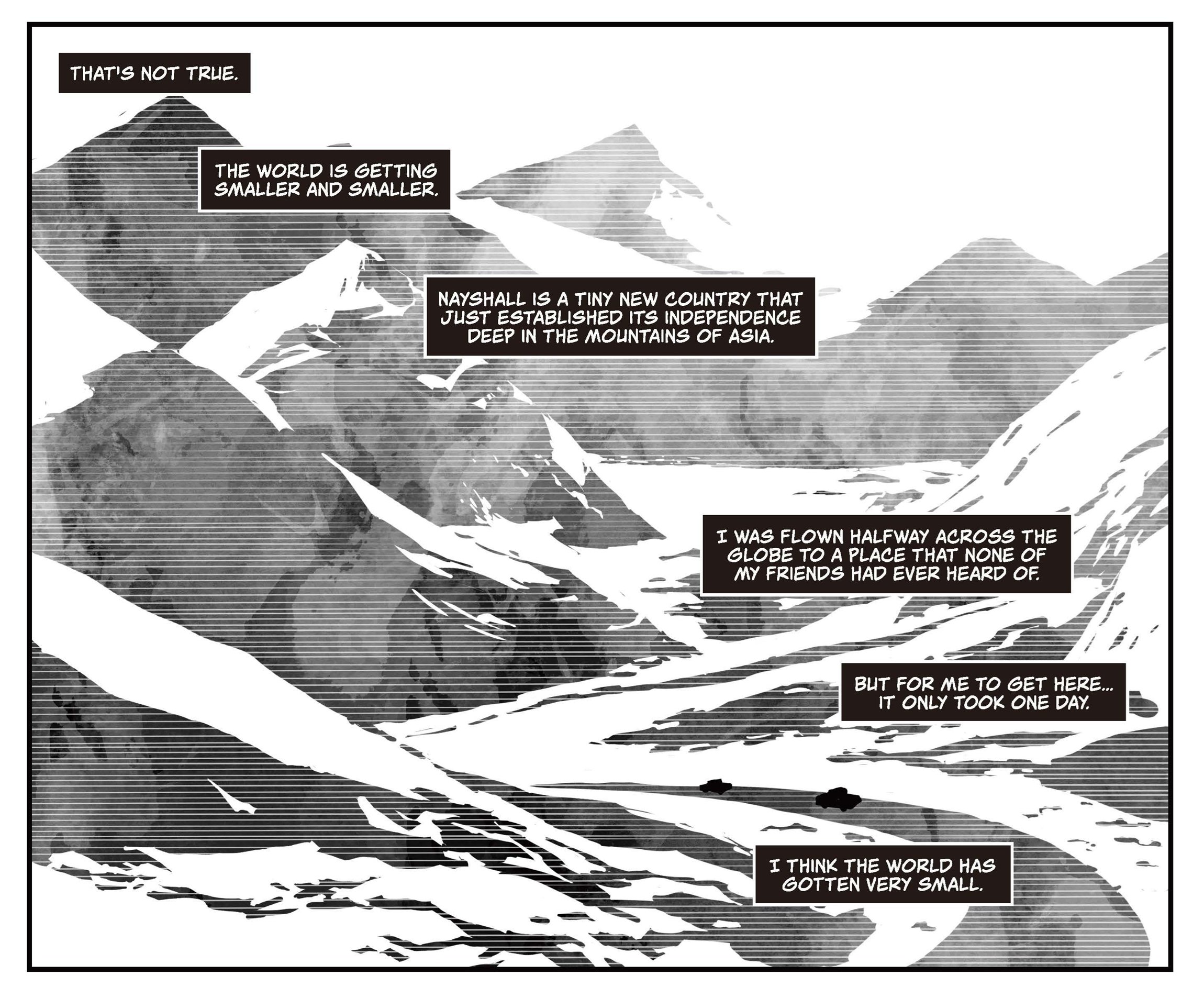
I see Street Fighter III as a gold standard for matured aesthetic direction in the world of video games. There's so much key art I just love looking at - carrying these cool colour choices, and bold shape language through everyone's key-posing. You can see all its various influences combine and evolve into something new. Merriment of the manga, grittier American Comic faces, Wushu, and actual street fighting influences that brought the identity of the series together. You get the sense that III was the entry where they began to take "World Tour" seriously, embracing multi-cultural sheet of inspirations in earnest. Its soundtrack pulls from a global variety of club music stylings; their interpretation of American Hip-Hop aesthetics was what first connected me to the game at first. The acid jungle and drum n' bass introducing me, and surely many others, to what has firmly become one of the key sounds of internet scene music. People from across the world know your country's underground culture now. Nowhere more is this expressed than in our new protagonist and rival - Alex and Hugo - paralleling American Pro-Wrestling exploding into this global staple of early 21st Century entertainment. Because in 1999, everything is connecting. We're all beginning to know each other. I remember the first time I watched Hayao in a tournament - he'd pull out his phone and post a selfie on twitter every time he landed a grapple, and the animation would last exactly long enough to let him. I registered his name in my brain as a dedicated spectator a while back, but now he's become this household name! I am reminded of a quote from one of Street Fighter 6's side story comics:
Though, there's something ironic to worshipping Street Fighter III unconditionally.
I don't think it's trying to be the best. I can only imagine the developers themselves had seen the downwards trends on the financials, and knew they were going to pull out of the arcade industry shortly after. It was the at-the-time creative staff of Capcom's last chance to apply their plateauing skills, before the genre - and the whole medium, really - would shift towards both 3D home console games. They wouldn't ever really return in this form, as Street Fighter IV was an outsource job. You get this honest sense that they had put everything they'd learned into it, in hopes it'd give the kids something to bounce off of. That sort of mindset is all over the game thematically, after all. And don't get me wrong, the "it's overrated" crowd are right: SF3 is NOT perfect!! I have high tolerance to bad balancing, but it's not even passing my basic standards; i.e. making projectiles useful and charge motions viable. Yun and Chun are more toxic of a top tier than your least fav fighting game's. The new generation have grown, new greats have emerged, and I'd say a handful of fighting games have surpassed this one. It's just a testament to how hard they had fought that this stays on our mind, at all really.
A friend once said to me, that what makes Y2K art stick out to them was that the 21st Century has been such a shitshow so far. The future really wasn't certain at all. So it's hard not to look at how Street Fighter III fought so hard to imagine a future. It's hard not to just...feel something!!! It may not have been the best they were been capable of, but it was the hardest they ever got the chance to try. We're looking back on the last match of a retired champion. We keep rewinding to this match, because even with the time they've given their successors, it hasn't exactly been replicated. And every time something new comes out of it even still, I think "hey, maybe they never stopped recording it".
LIVE THE LEGEND
THERE IS NO LIMIT
3RD STRIKE
Yeah, I've been waiting for this
FIGHT FOR THE FUTURE